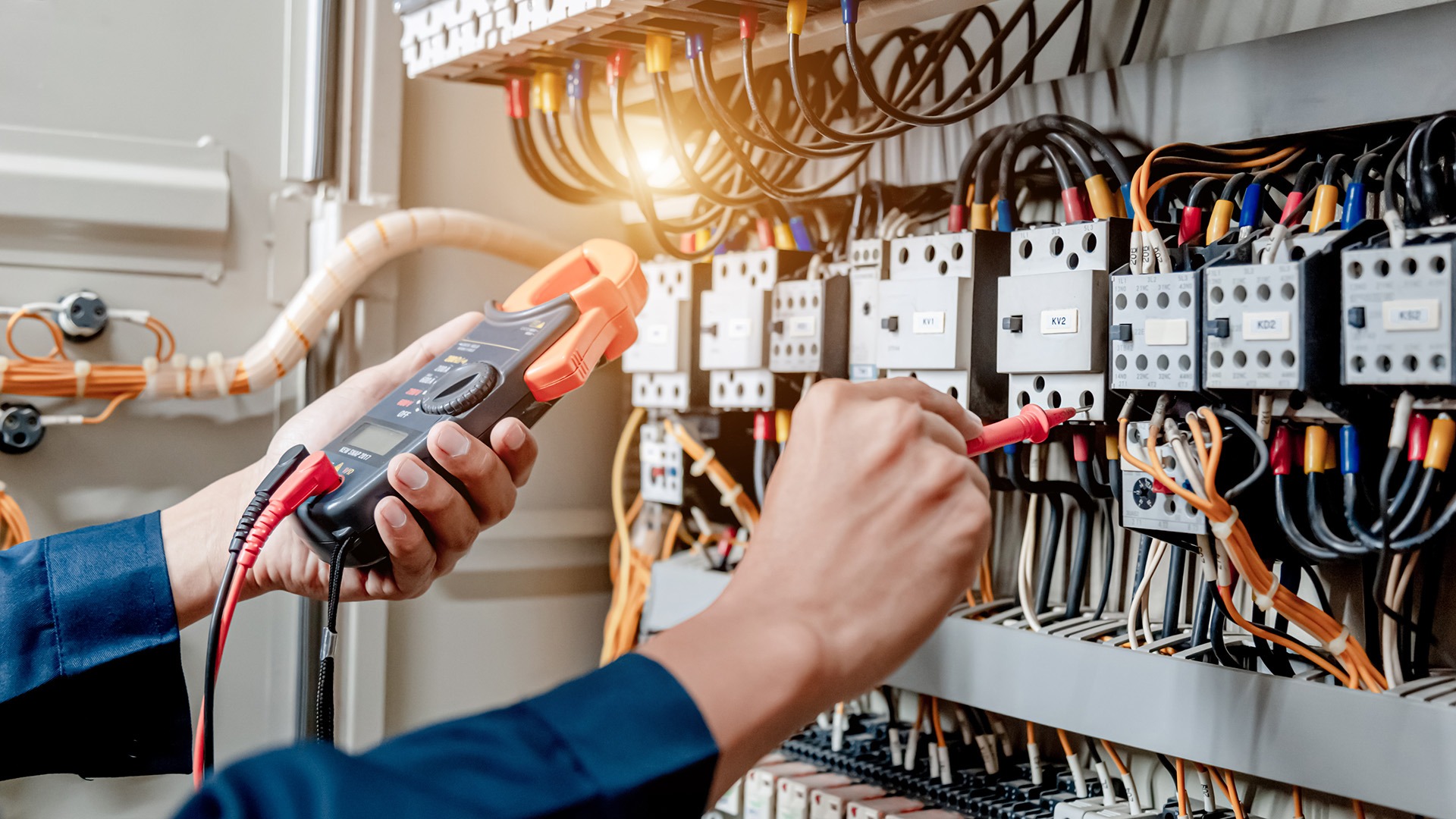
Become an Electrician
Electricians install and maintain the wiring, controls and lighting that every building, plant and data center depends on. It is the largest apprenticeship-driven trade in North Texas.
The numbers
$62,350 / year
$29.98 / hour
About 81,000 openings per year nationally
Includes growth plus workers retiring or leaving the field
9% growth, 2024–2034
Much faster than the average for all occupations
High school diploma or equivalent
Most states license electricians. In Texas, licensing runs through TDLR.
Starting out
Registered apprentices commonly start around 40–50% of the journeyman wage in their area and get a raise at each step of the program, so you earn while you learn instead of paying tuition.
Lowest 10% earn under $39,430
Top of the trade
Top 10% earn over $106,030
Based on the national wage distribution for electricians.
Source occupation: Electricians. Wage figures are U.S. Bureau of Labor Statistics Occupational Outlook Handbook national data for May 2024. Job-opening and growth figures are BLS projections for 2024–2034. Pay in the Dallas–Fort Worth market varies by employer, union agreement and overtime.
The career path
Each step is a real milestone with a pay change attached to it. Nobody skips steps — but almost nobody takes longer than this either.
- 1
Registered apprentice
Years 1–4 (about 8,000 hours on the job)Starts near the bottom of the wage range and steps up every year
You are hired and paid from day one. Days are spent on job sites pulling wire, bending conduit and learning layout; nights or one day a week are classroom hours on code and theory.
- 2
Journeyman electrician
After roughly 8,000 documented hours plus a state examAround the national median of $62,350, higher with overtime
You work unsupervised, read blueprints, troubleshoot circuits and start directing apprentices on your crew.
- 3
Foreman or general foreman
Typically 2–5 years after journeymanAbove median, with a premium for running crews
You run the manpower, material and schedule for an area of the job and answer to the project superintendent.
- 4
Master electrician, estimator or superintendent
4+ years as a journeyman (Texas master requires it)Top of the range — the top 10% clear $106,030
Master license lets you pull permits and eventually hold an electrical contractor license and run your own shop.
A normal day on the job
- Read prints and lay out where devices, panels and conduit runs go
- Bend and install conduit, pull and terminate wire
- Install panels, switches, receptacles, lighting and controls
- Troubleshoot dead circuits and faults with a meter
- Test and label circuits before energizing
- Keep the work to National Electrical Code and pass inspection
- Log your apprenticeship hours and attend class
What you need to get in
- At least 18 years old for most apprenticeships (some accept 17 with a diploma)
- High school diploma or GED
- Reliable transportation and a valid driver license
- Algebra-level math — many programs give an entrance test
- Able to lift material, climb ladders and work in heat
- Drug screen and background check are standard
Licenses & certifications
In the trades, credentials are what move your pay. Here is the order most people collect them in.
Texas Apprentice Electrician registration
Day oneTexas Department of Licensing and Regulation (TDLR)
Required to work legally as an apprentice under a licensed electrician. Simple application, no exam.
OSHA 10 / OSHA 30
First monthsOSHA-authorized trainers
Construction safety card most general contractors require before you badge onto a site.
Journeyman Electrician license
After about 8,000 supervised hoursTDLR
Exam on the National Electrical Code and Texas rules. This is the credential that changes your pay bracket.
Master Electrician license
After 4 years as a journeymanTDLR
Lets you pull permits and supervise electrical work for a contractor.
NFPA 70E arc-flash training
OngoingNFPA / employer programs
Electrical safe work practices. Industrial and data center clients often require it annually.
Licensing rules change and vary by state and city. Confirm current requirements with the licensing board or apprenticeship sponsor before you plan around them.
Specializations
You do not have to pick on day one, but knowing the branches helps you aim. The narrower specialties usually pay the most.
Commercial / industrial
Offices, hospitals, plants — conduit, switchgear, motor controls.
Data center power
UPS systems, busway and redundancy work; one of the fastest growing niches in DFW.
Low voltage / technology
Fire alarm, security, structured cabling and building controls.
Instrumentation and controls
PLCs, VFDs and process controls in manufacturing and energy.
Solar and storage
PV arrays, inverters and battery systems tied into the grid.
Your step-by-step action plan
Start at step one this week. You do not need money or a degree to begin — you need a safety card, a ride, and a list of employers to call.
- 1
Take the right classes while you are still in school
Algebra, geometry and any shop, electronics or construction-trades elective. Keep your attendance clean — apprenticeship committees ask about it.
- 2
Get your safety card
Finish an OSHA 10 course (often free through a school or workforce program). It makes you hireable as a helper immediately.
- 3
Pick your training route
Union apprenticeship through the IBEW Local 20 / North Texas Electrical JATC, a merit-shop program through IEC Fort Worth/Tarrant County, or hire on as a helper with a contractor that sponsors school.
- 4
Apply to 5–10 employers on BlueBoard
Filter the directory for electrical contractors and apply to every open helper or apprentice posting. Volume matters more than a perfect resume at this stage.
- 5
Register with TDLR and start logging hours
Once hired, get your apprentice registration and keep your own copy of every hour you work — you will need it for the journeyman exam.
- 6
Buy tools as you go, not all at once
Start with hand tools, meter, and boots. Ask your foreman what they expect before you spend money.
- 7
Sit for the journeyman exam the month you are eligible
Study the code book all through year four. The license is the single biggest jump in pay you will ever get.