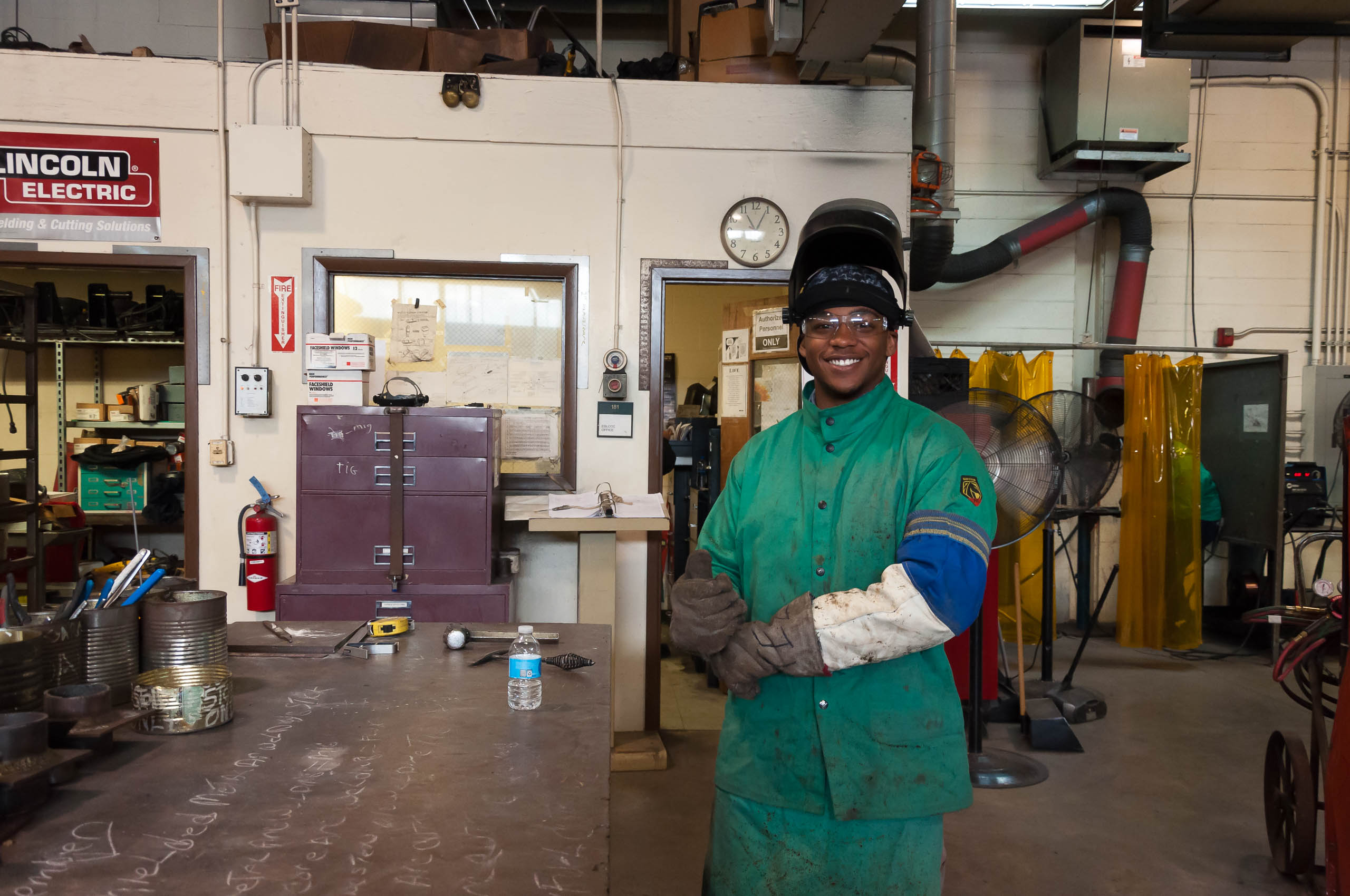
Become a Welder
Welders join metal for structures, pipe, pressure vessels and manufactured products. Certifications, not seniority, decide how much you earn — and the workforce is retiring fast.
The numbers
$51,000 / year
$24.52 / hour
About 45,600 openings per year nationally
Includes growth plus workers retiring or leaving the field
2% growth, 2024–2034
Slower than average growth, but heavy replacement demand as welders retire
High school diploma plus a welding certificate or on-the-job training
No state license; you qualify by passing weld tests to a code such as AWS D1.1 or ASME Section IX.
Starting out
Pay in welding tracks your certifications and the position you can weld in. Structural shop work sits near the bottom of the range; certified pipe welders and specialty work (pipeline, nuclear, aerospace) sit far above the median.
Lowest 10% earn under $38,130
Top of the trade
Top 10% earn over $75,850
Based on the national wage distribution for welders, cutters, solderers and brazers.
Source occupation: Welders, cutters, solderers and brazers. Wage figures are U.S. Bureau of Labor Statistics Occupational Outlook Handbook national data for May 2024. Job-opening and growth figures are BLS projections for 2024–2034. Pay in the Dallas–Fort Worth market varies by employer, union agreement and overtime.
The career path
Each step is a real milestone with a pay change attached to it. Nobody skips steps — but almost nobody takes longer than this either.
- 1
Shop helper / fitter
Months 0–12Entry wage
Grinding, fit-up, material handling and tacking while you build hood time.
- 2
Certified structural welder
Year 1–2, after passing a plate testAround or above the median of $51,000
Production or field welding to a structural code, usually MIG or flux-core.
- 3
Certified pipe welder
Years 2–5, after passing a 6G testWell above the median; the top 10% clear $75,850
TIG root and stick fill on process, power and mechanical piping. This is where the money is.
- 4
Welding inspector, foreman or fabrication supervisor
5+ yearsTop of the range, off the tools
CWI inspectors, weld procedure writers and shop supervisors earn on knowledge rather than output.
A normal day on the job
- Read weld symbols and prints to know joint type and position
- Cut, bevel and fit up material before welding
- Run MIG, TIG, stick or flux-core beads to a written procedure
- Control heat and distortion; grind and clean between passes
- Inspect your own welds and repair defects
- Maintain machines, leads, gas and PPE
- Work to a weld map and sign off on completed joints
What you need to get in
- At least 18 years old for most industrial employers
- High school diploma or GED preferred; a welding certificate helps a lot
- Steady hands, good near vision and physical stamina
- Willingness to work in heat, at height or in confined spaces
- Ability to pass a weld test on demand — this is the real interview
- Drug screen and background check are standard
Licenses & certifications
In the trades, credentials are what move your pay. Here is the order most people collect them in.
AWS D1.1 structural plate certification
Year 1American Welding Society test facility
The baseline certification for structural steel work.
ASME Section IX pipe qualification (6G)
Years 2–5Employer or third-party test lab
All-position pipe test. Passing it typically moves you into the highest paying field work.
OSHA 10 / OSHA 30
First monthsOSHA-authorized trainers
Required for field and industrial sites.
Certified Welder (AWS CW)
Any stageAmerican Welding Society
Portable, nationally recognized proof of your weld quality.
Certified Welding Inspector (AWS CWI)
5+ years experienceAmerican Welding Society
Requires documented experience and an exam; moves you into inspection and QC pay.
Licensing rules change and vary by state and city. Confirm current requirements with the licensing board or apprenticeship sponsor before you plan around them.
Specializations
You do not have to pick on day one, but knowing the branches helps you aim. The narrower specialties usually pay the most.
Structural steel
Beams, columns and decking on buildings and bridges.
Pipe welding
Process, mechanical and power piping — highest demand in DFW industrial work.
Fabrication / sheet metal
Shop work building assemblies from prints.
Pipeline
Cross-country work, travel-heavy, premium pay.
Specialty alloys (TIG)
Stainless and aluminum for food, pharma and aerospace.
Your step-by-step action plan
Start at step one this week. You do not need money or a degree to begin — you need a safety card, a ride, and a list of employers to call.
- 1
Take welding in high school or at a community college
Hood time is everything. A one-year certificate program is the standard on-ramp.
- 2
Learn one process well before adding others
Most people start with MIG or flux-core, then add stick and TIG.
- 3
Pass a structural plate test
Your first certification turns you from a helper into a welder on paper.
- 4
Buy your own hood, gloves and grinder
Employers supply machines, not personal gear. A good auto-darkening hood pays for itself.
- 5
Apply to fabrication and mechanical employers on BlueBoard
Shops hire fitters and helpers year round; that is the fastest way to get paid hood time.
- 6
Train for the 6G pipe test
This single test is the biggest pay jump available in welding. Practice TIG root work relentlessly.
- 7
Decide between tools and inspection by year five
Stay on the torch for maximum hourly pay, or move toward CWI and QC for a longer career on your body.